Irrigation Systems for Gilbert and East Valley Landscapes
Commercial-grade components, built for Arizona heat and hard water.
Nobody thinks about their irrigation until something dies. It's August, it's 112 degrees, and the tree you've spent three years growing is dropping leaves because an emitter clogged two weeks ago. A good system is one you never have to think about: it runs, every plant gets water, and your yard looks the same in September as it did in May.
In the East Valley, your irrigation system decides whether your landscape makes it through summer. Fernweh Outdoor designs and installs drip and lawn irrigation built for Arizona heat and hard water, using commercial-grade components and a process that doesn't cut corners where you can't see them. Most of our irrigation work is part of a full landscape installation, and we also renovate existing systems that aren't keeping up.
The equipment we install
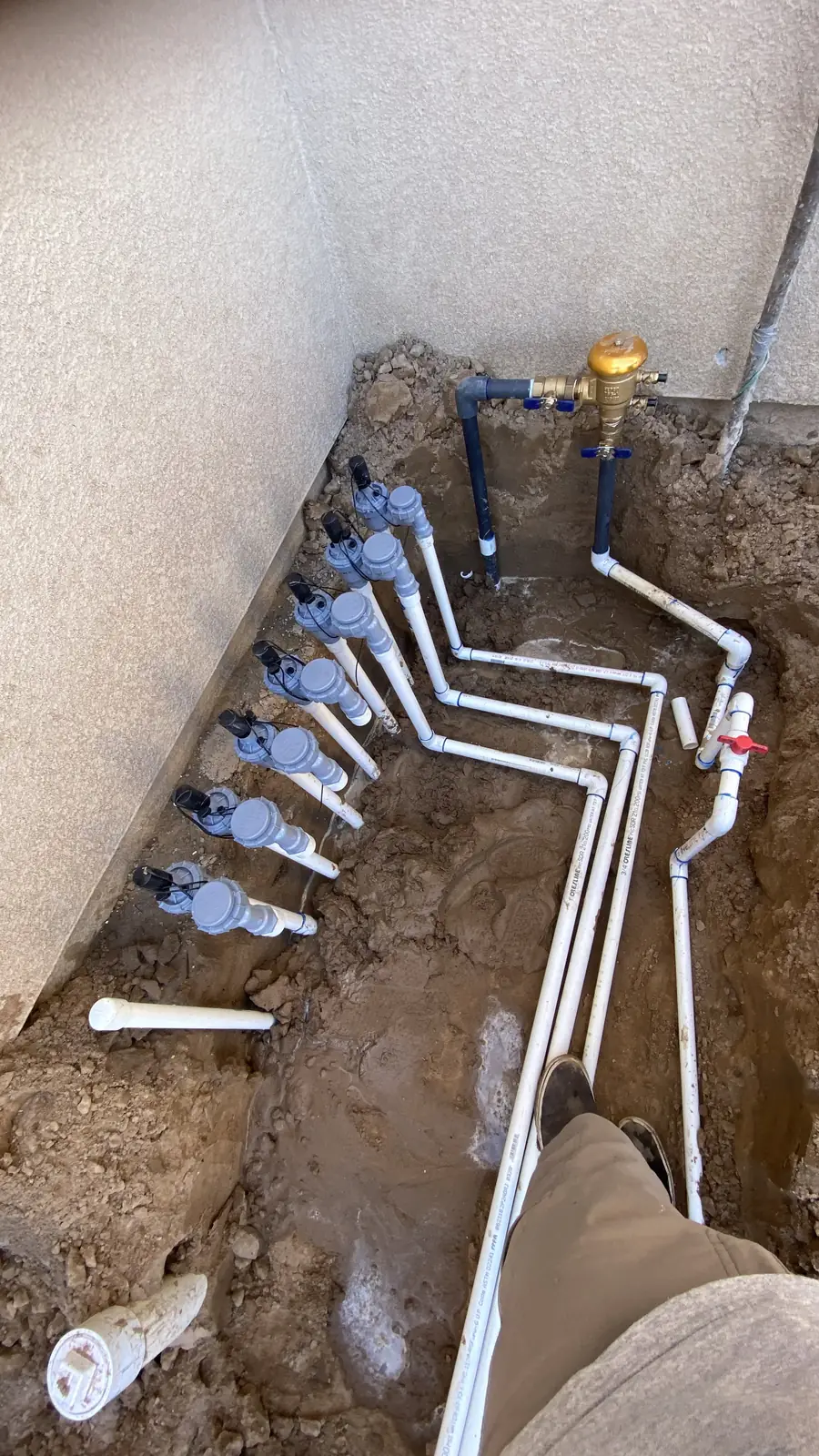
- Valves. Rain Bird irrigation valves.
- Controllers. Orbit timers on standard installs, or Rachio and Orbit B-hyve Wi-Fi controllers you can run from your phone.
- Drip lines. Schedule 40 PVC laterals, sized by calculation based on run distance and the water output each zone needs.
- Distribution. Bowsmith distribution manifolds, the same setup commercial sites call for.
- Filtration and pressure. a combination pressure regulator and filter installed at every drip valve.
- Lawn. spray heads fitted with rotating nozzles.
Why we use manifolds instead of flag emitters
Many residential drip systems rely on flag emitters at each plant. They're quick to install, but they're finicky, and Arizona's hard water clogs them. When one plugs, the plant it feeds starts struggling before anyone notices. We install Bowsmith distribution manifolds placed strategically through the landscape, with 1/4-inch tubing run to each plant. They're more reliable, they don't clog with hard water, and there are no emitters sitting at every plant waiting to fail.
How we install a drip system
- Control valve. We install the irrigation valve for the zone.
- Filter and pressure regulator. A combination unit goes in right at the valve.
- Trenching. Laterals are trenched to follow your landscape design or existing plant layout. Residential lines are buried at 6 inches, the standard depth in the East Valley, where there's no frost line to dig below.
- Manifolds and tubing. Distribution manifolds are set strategically, with 1/4-inch tubing run to each plant.
- Backfill and cleanup.
- Testing. We run and check the full system.
- Controller setup. We install and program your timer or Wi-Fi controller and leave the manual with you.
How we zone your yard
Lawn systems follow the same process with spray heads in place of manifolds. We use rotating nozzles, which apply water more evenly and keep overspray off walls, walkways and patios.
On smaller yards, trees and shrubs usually share a zone, with the manifold layout sending additional flow to the trees. On larger properties, trees get their own zone so they can be watered on a schedule that fits their deeper roots.
The shortcuts we don't take
- Shallow trenching. Pipe laid just under the surface gets cut or cracked the first time someone digs a planting hole.
- Skipping the pressure regulator. Drip components are built for lower pressure than your home's water supply. Without a regulator, tubing pops off fittings and emitters wear out early.
- Flag emitters at every plant. Cheaper up front, but they clog with hard water and fail one plant at a time.
Built by our own crews
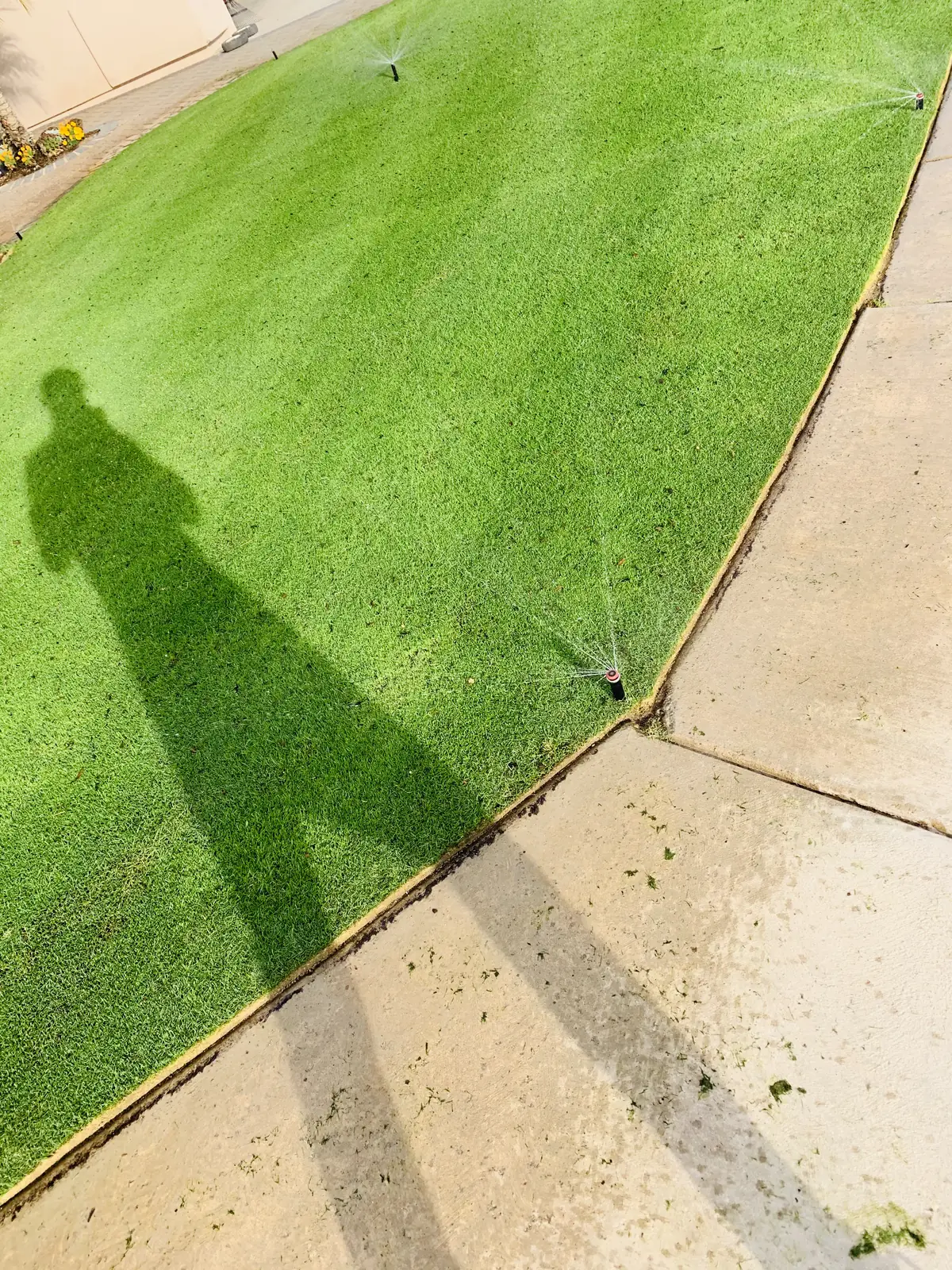
Irrigated lawn sprinkler coverage — built by our own crews, right here in the East Valley.
Irrigation renovations
If your current system is leaking, clogging or leaving plants dry, we can rebuild it to the same standard as a new install, whether that means new valves, adding filtration and pressure regulation, or converting failing emitter lines to distribution manifolds.
Hard water and triple-digit heat are tough on irrigation parts, which is why every component we use is chosen to handle both. A Wi-Fi controller adds another layer: it adjusts watering based on local weather, so you're not running a July schedule in January.
Our warranty
Every irrigation system we install carries a 3-year workmanship warranty on the underground work: the pipe, fittings and connections we install below grade. Sprinkler heads damaged by foot traffic or mowing aren't covered, since that damage happens after installation.
What affects the cost
Irrigation is quoted after a site visit, because cost depends on what's in the ground and what's around it. The main factors are site conditions, the number of plants, total pipe run length, and the restoration work needed after installation, such as replacing rock or repairing areas we trench through.
Start with a free consultation
Your trees and plants take years to grow in. The system that keeps them alive deserves the same care.
We'll look at your yard and your plants, then lay out a system zoned for what's actually growing there.
Recently built by our crews
Start with a free consultation
Free on-site consultation. Your 3D design ($279) comes after, credited toward your project.
Schedule a Consultation