Paver Patios, Walkways and Driveways in Gilbert and the East Valley
Built on a base that stays flat and drains, ten summers from now.
It's the first cool evening in October. Friends are over, the grill's going, and everyone ends up outside. Nobody's stepping around a dip in the patio or a paver that's lifted at the edge. That's what you're really paying for, and it should still feel that way ten summers from now.
Any paver patio looks good on install day. The difference shows up after the first monsoon season, when a poorly built base starts to settle, dip and hold water. Fernweh Outdoor installs paver patios, walkways and driveways across Gilbert, Chandler, Mesa, Queen Creek and the rest of the East Valley, and we build every one from the ground up to stay flat, drain correctly and hold its lines for years.
The pavers we install
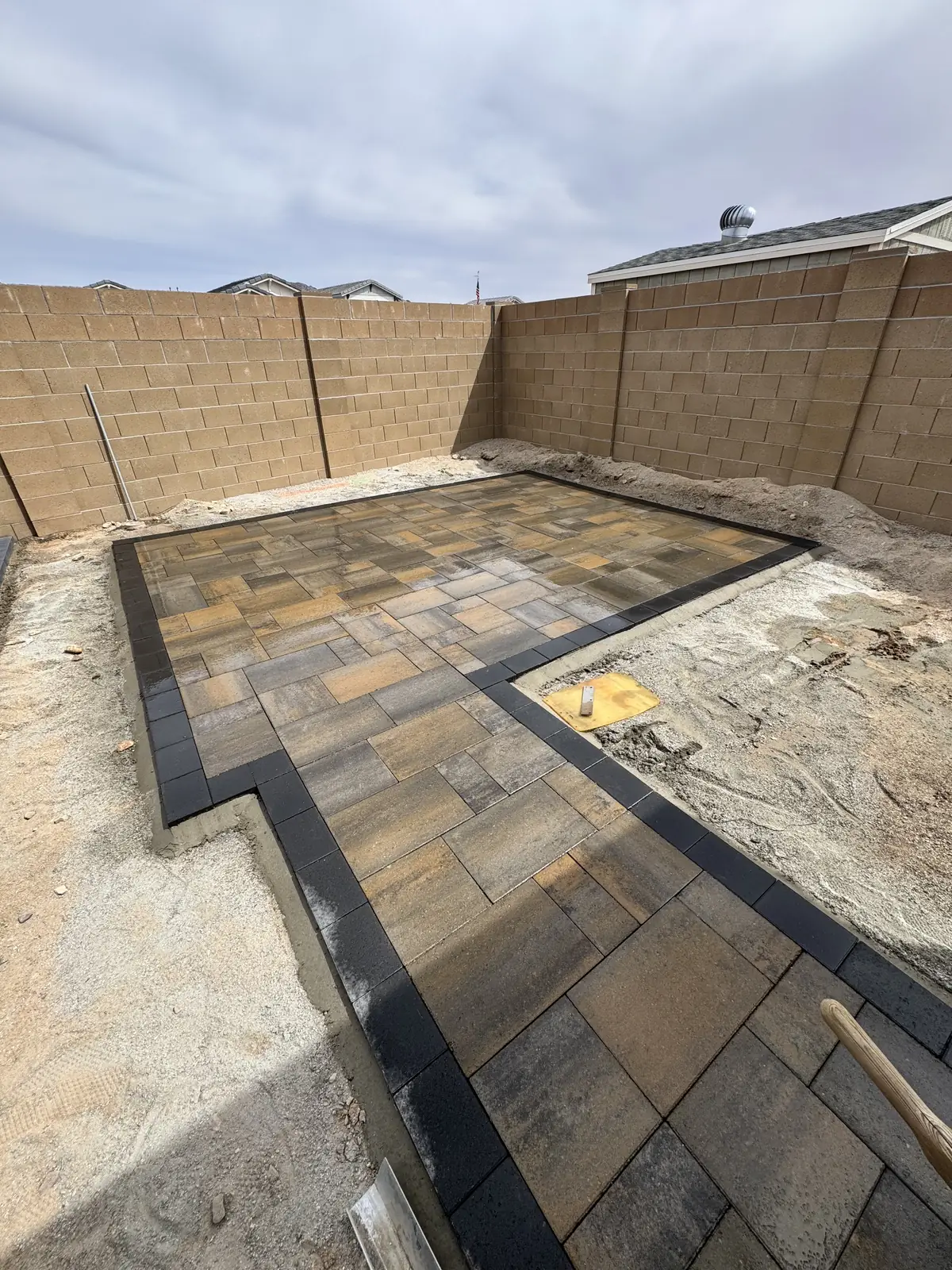
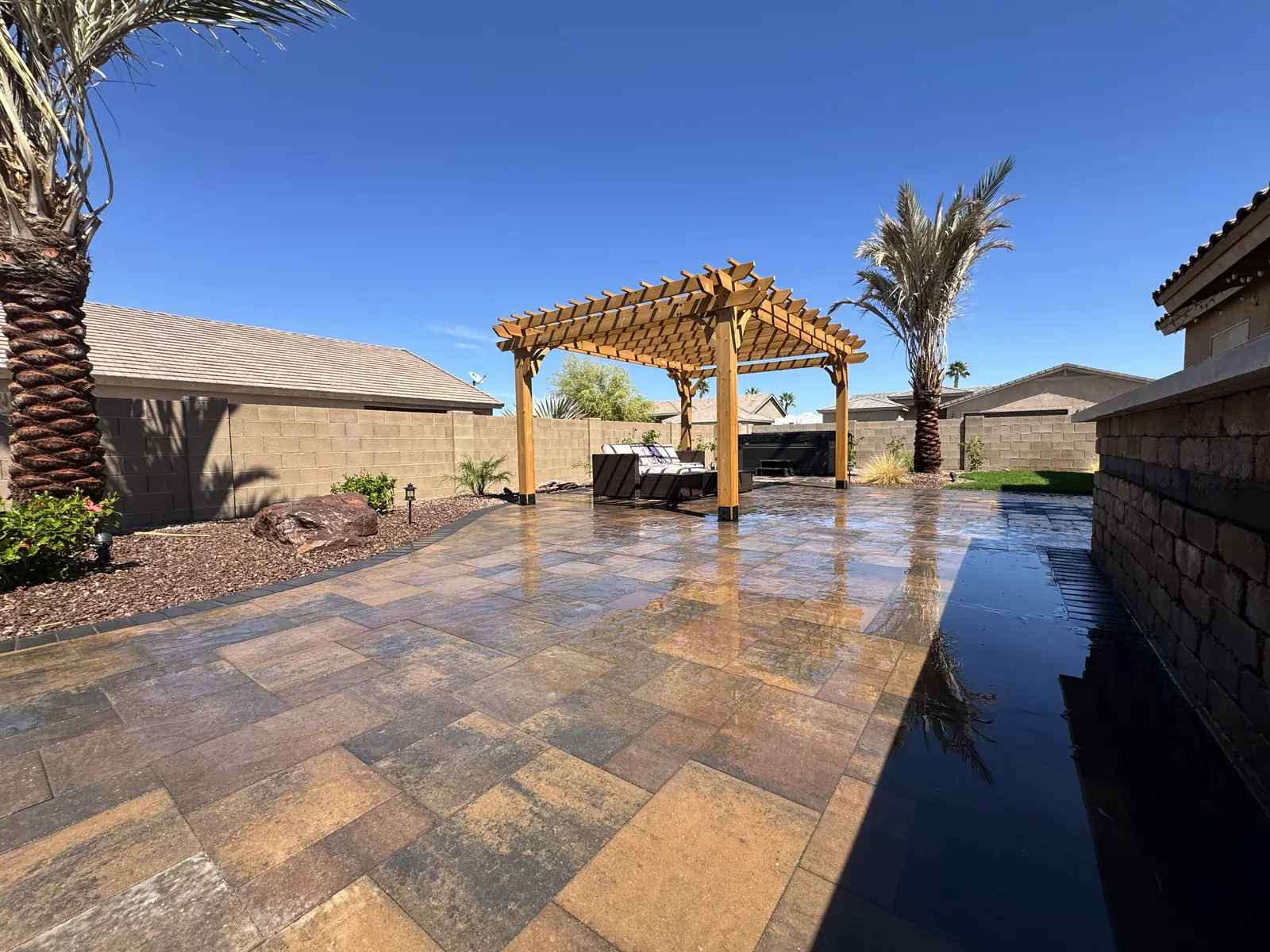
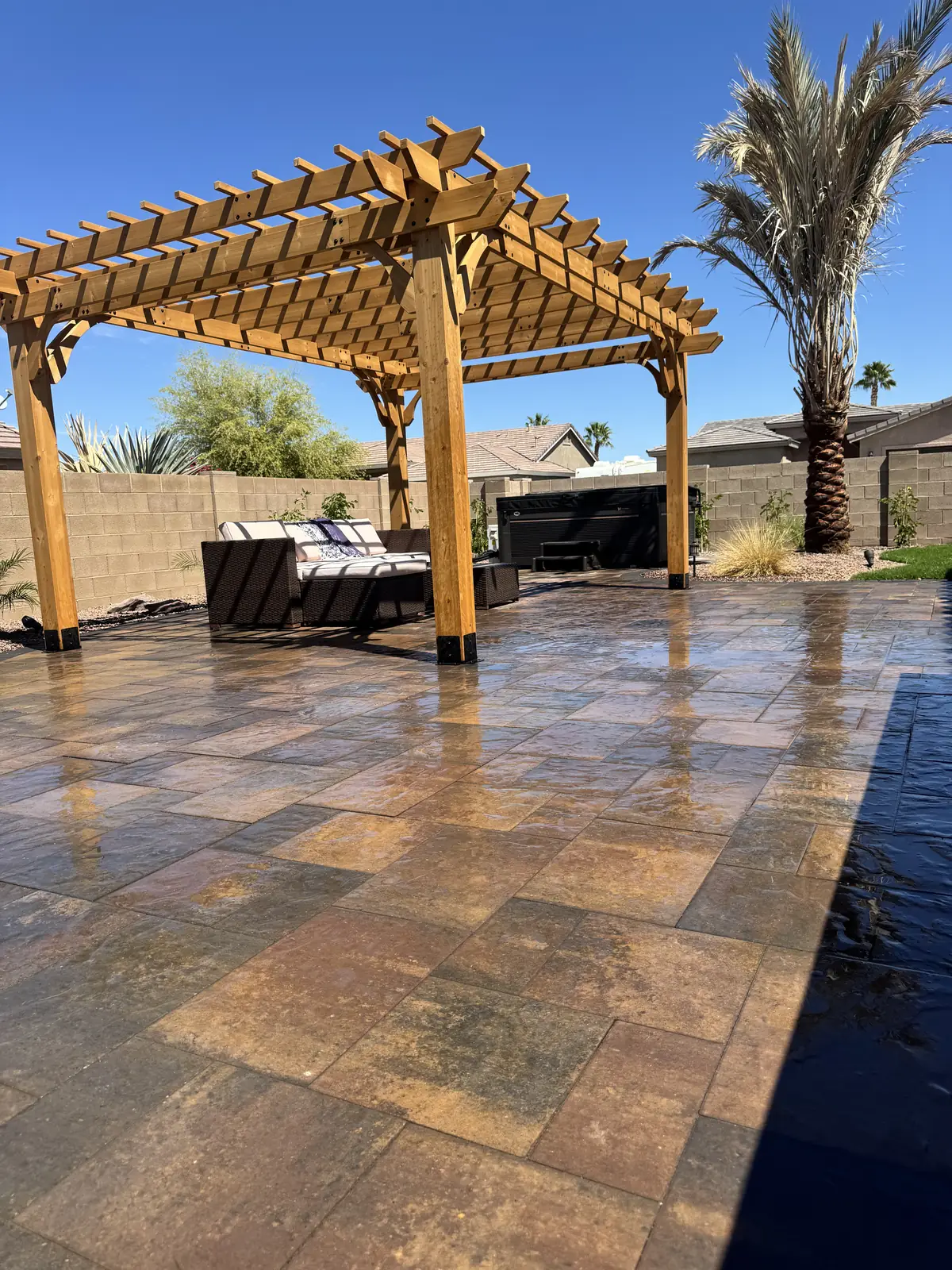
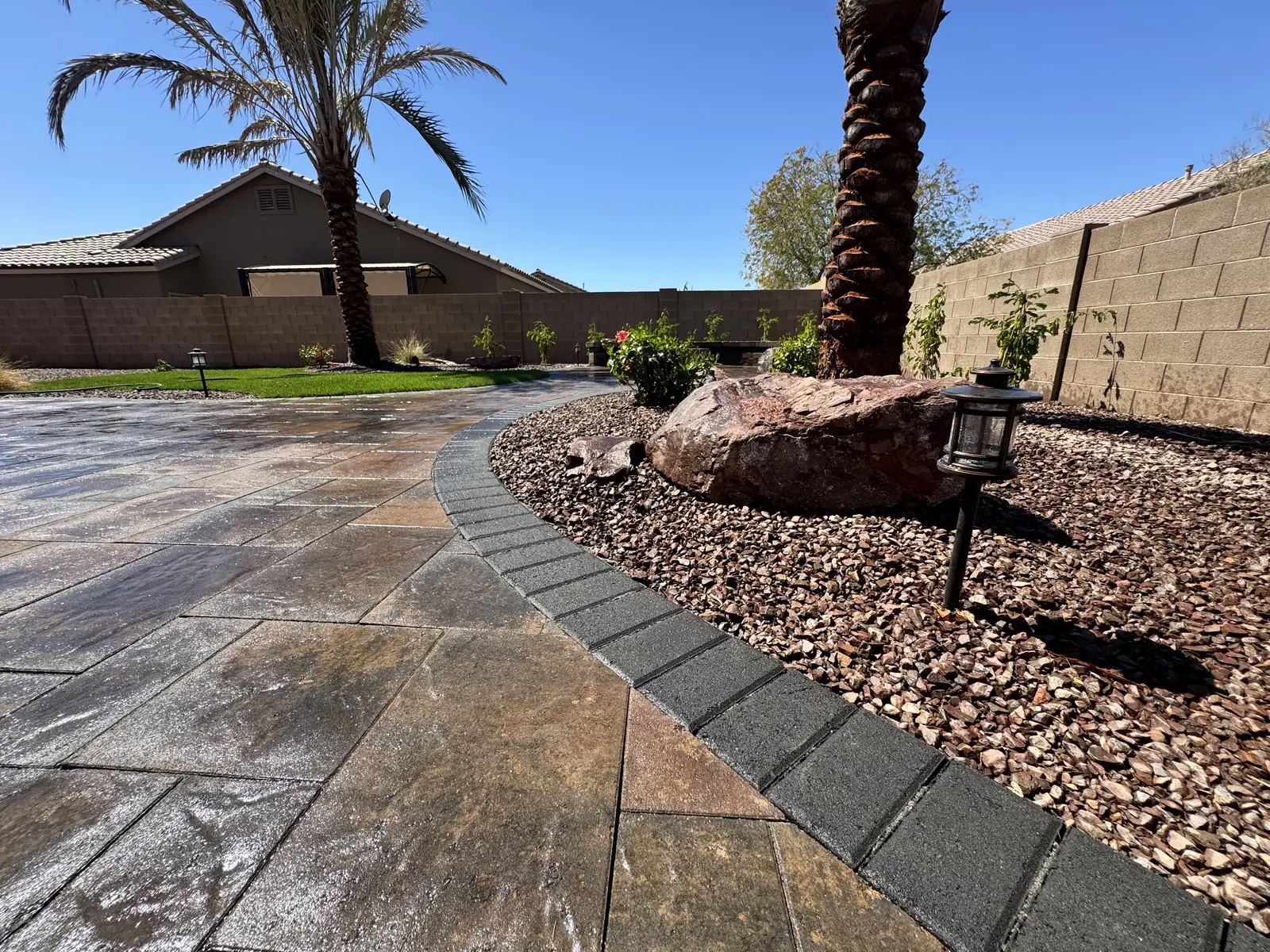
We primarily install Belgard pavers and also work with Phoenix Pavers. Our work leans toward large-format pavers like Belgard Dimensions 12, paired with contrasting accent banding: clean, straight lines that suit most newer East Valley homes. We're just as comfortable with a more timeless look built around long, sweeping curves. The design sets the style. The base underneath gets the same care either way. Prefer natural stone? See travertine.
Two base systems, chosen for your site
Most paver problems start below the surface, so we don't put the same base under every yard. We choose the system based on your soil and how much water the area needs to move.
- Standard base. compacted ABC (aggregate base course) with a 1-inch mortar sand bedding layer. It drains well, doesn't settle, and is the right call for most patios and walkways.
- Open-graded base. for areas that need higher drainage, we install 3/4-inch clean stone with a 1-inch bedding layer of 3/8-inch clean chip stone. Water passes straight through the system instead of sitting under your pavers. It's one of the most effective installation methods being used by hardscape contractors across the country right now.
Base depth follows the plan for each project: typically 3 to 4 inches for patios and walkways, and 6 inches or more for driveways that carry vehicle weight.
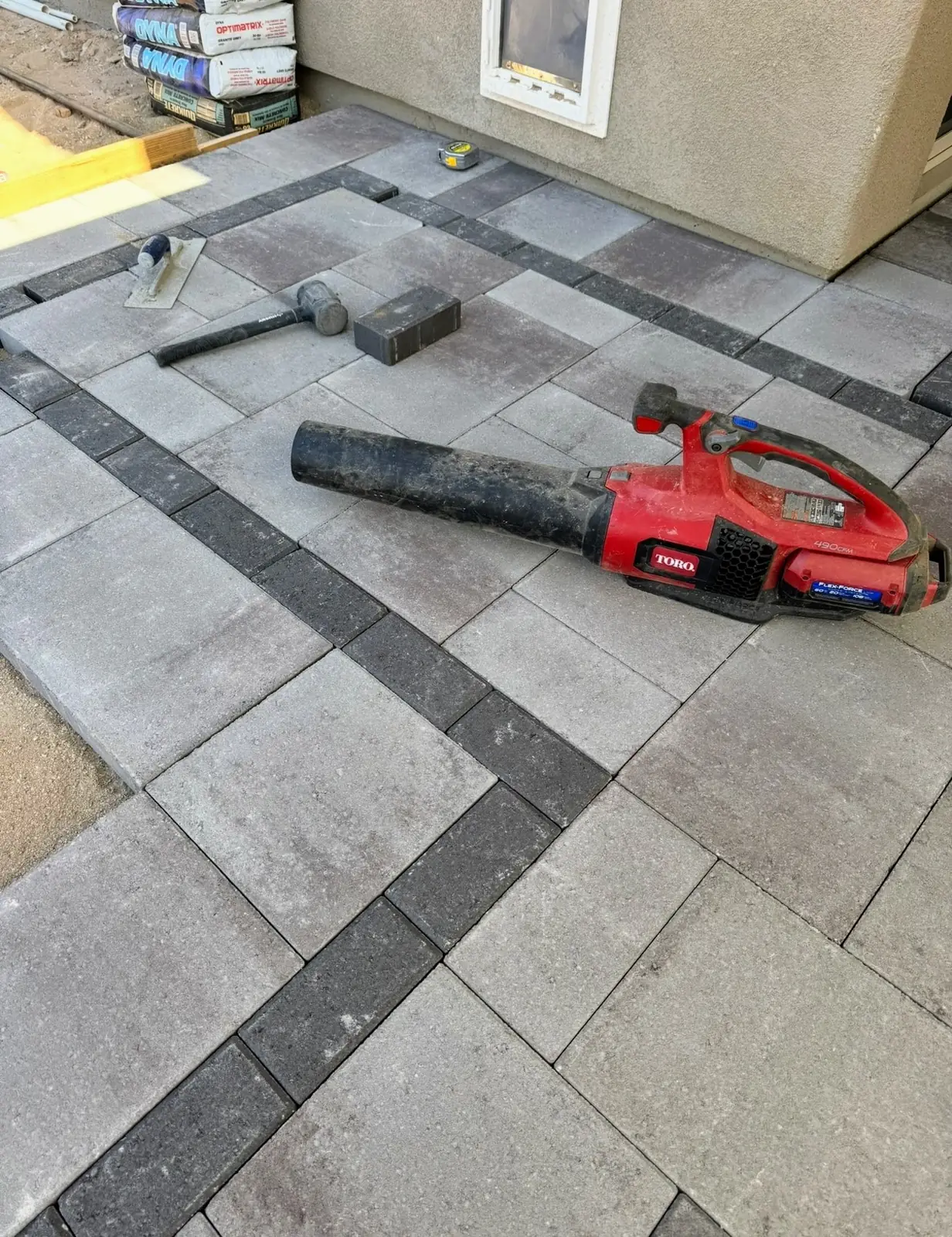
Built by our own crews
Large format paver install accent banding — built by our own crews, right here in the East Valley.
How we install a paver project
- Layout. We mark out the full footprint and pattern from the design before any digging starts.
- Excavation. We dig to the depth the base system requires, not the depth that's fastest.
- Subgrade compaction. The native soil is compacted before any base material goes in.
- Base installation. Base material goes in at the depth called out in the plan and is compacted.
- Screeding. We set the bedding layer with screed rods and verify grade with a laser level, so the surface is consistent and sheds water in the right direction.
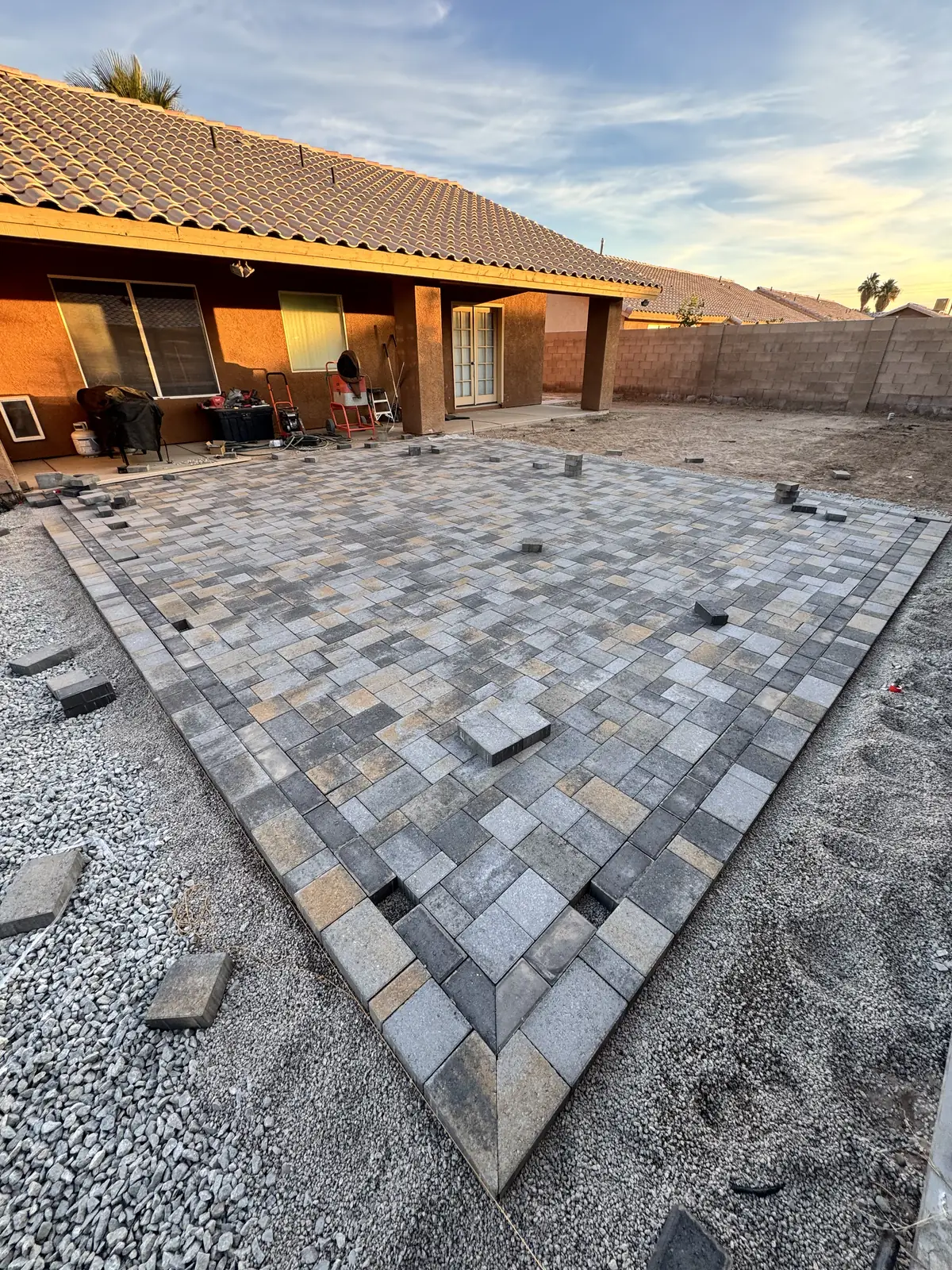
- Paver installation. Pavers go down in the planned pattern, with cuts and banding set to the layout.
- Edge restraint. A concrete edge restraint is installed around the full perimeter to lock the field in place.
- Polymeric sand. Poly sand is swept into every joint.
- Final compaction. We run a plate compactor over the finished surface with a paver protection mat. This seats the pavers into the bedding layer and works the sand down into the joints without marring the surface.
- Activation. Excess sand is blown off and the poly sand is activated per the manufacturer's instructions.
- Sealing (optional). A sealer is available as an add-on to protect against stains and bring out the natural color of the pavers.
The shortcuts we don't take
After 15 years in the field, we know what shortcuts look like two summers later. These are the ones we see most often:
- Shallow excavation. Some installers skip proper excavation and lay pavers over a thin layer of 1/4-inch minus. It looks fine on day one, then settles into dips and waves.
- 1/4-inch minus as the base. It holds moisture, turns to mud when it's saturated, and lets pavers shift and settle over time. We use ABC or open-graded stone.
- Mason sand in the joints. Mason sand washes out and leaves gaps. We use polymeric sand, which hardens in place and locks the pavers together.
- Grading by eye. Screed rods and a laser level give you a consistent surface and proper drainage, not a best guess.
Details that hold up
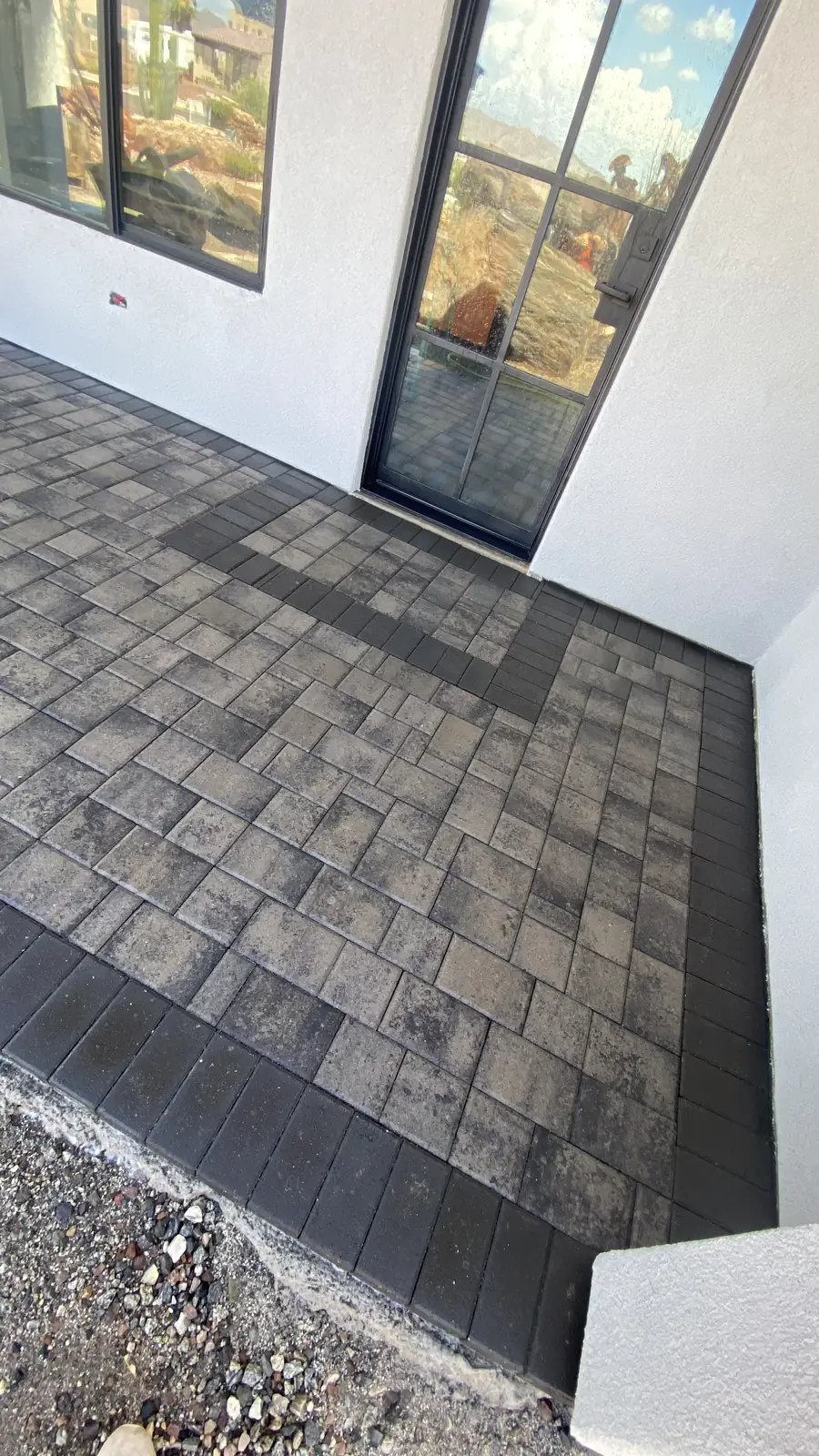
Large format pavers diamond pattern — built by our own crews, right here in the East Valley.
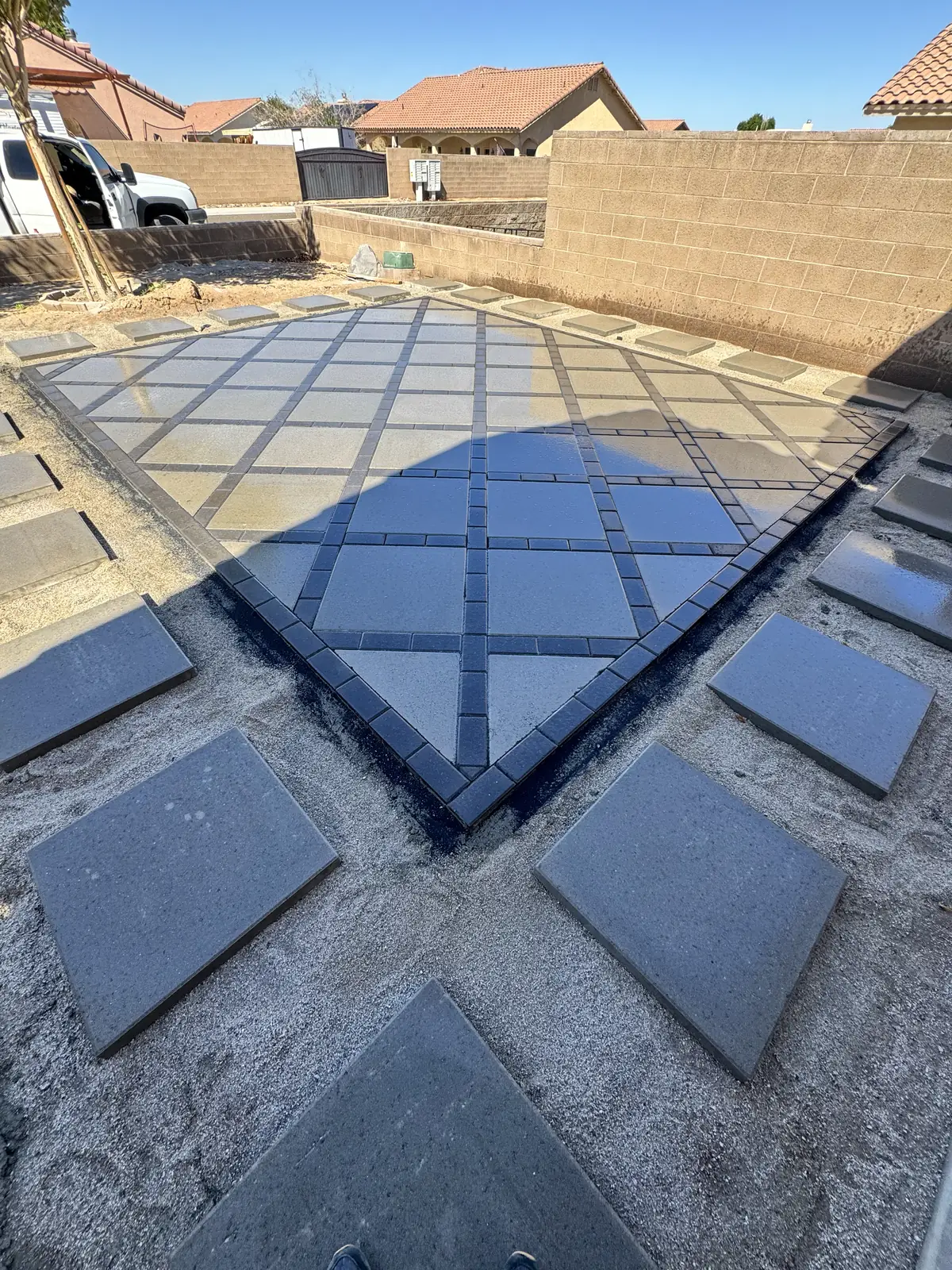
Built for monsoon season
East Valley yards can go from bone dry to flooded in a single afternoon. That's when you find out how a paver job was built. A base that holds water softens, and the pavers above it sink and shift. Our base systems are chosen to drain, so a heavy storm runs through and off your patio instead of sitting underneath it.
Our warranty
Every Fernweh Outdoor paver installation is backed by a 10-year workmanship warranty. We can stand behind our work that long because of how the base goes in.
What affects the cost
Every paver project is quoted individually after a site visit, because the biggest cost factors don't show up in a photo. Excavation and demo often matter as much as the pavers themselves: how deep we need to dig, and whether old concrete, turf, rock or an existing patio has to come out first. From there, pricing depends on which base system your site needs, the paver line and format, pattern and banding, curves versus straight lines, and how easily equipment can get into your yard.
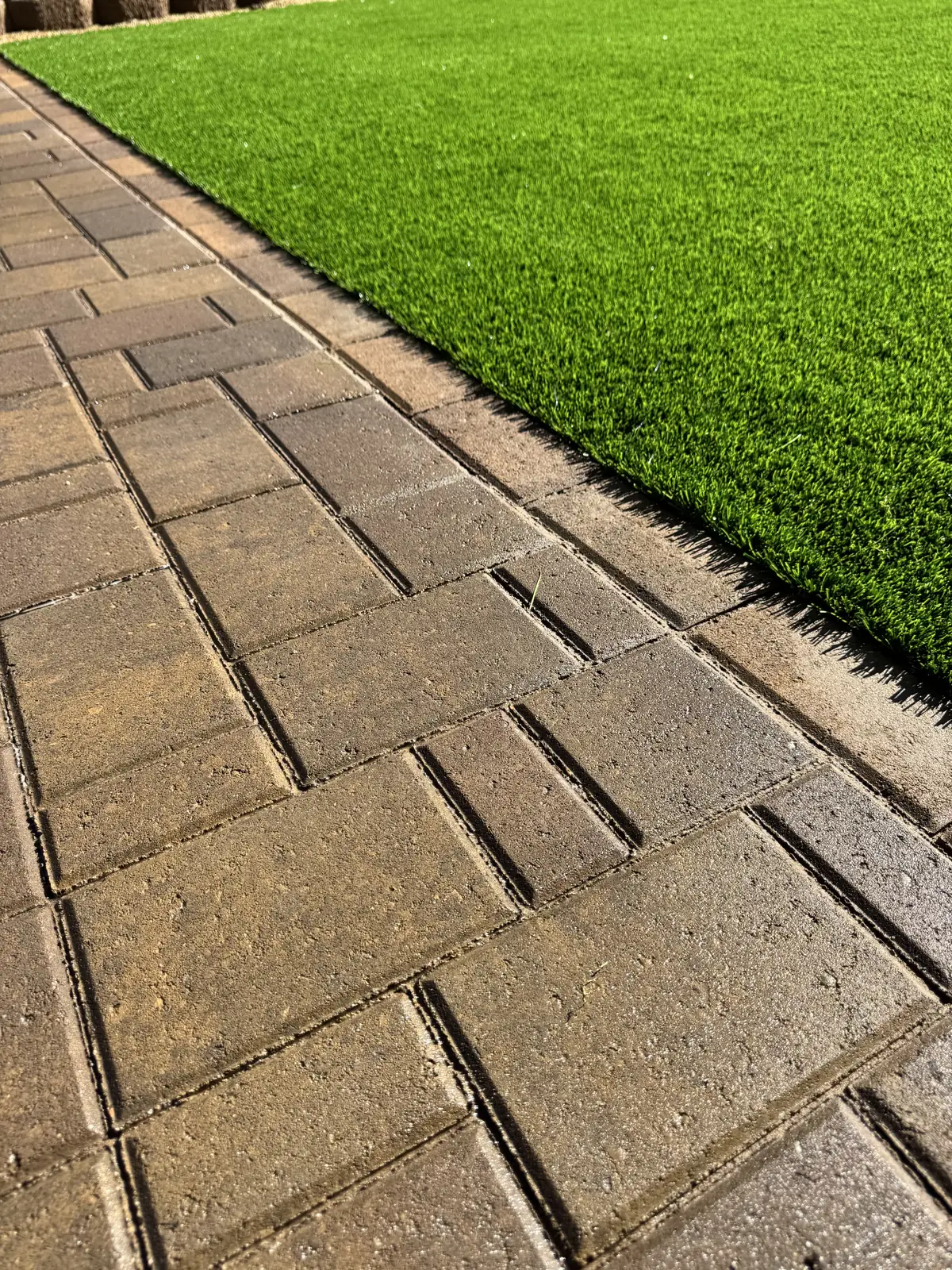
The finish matters
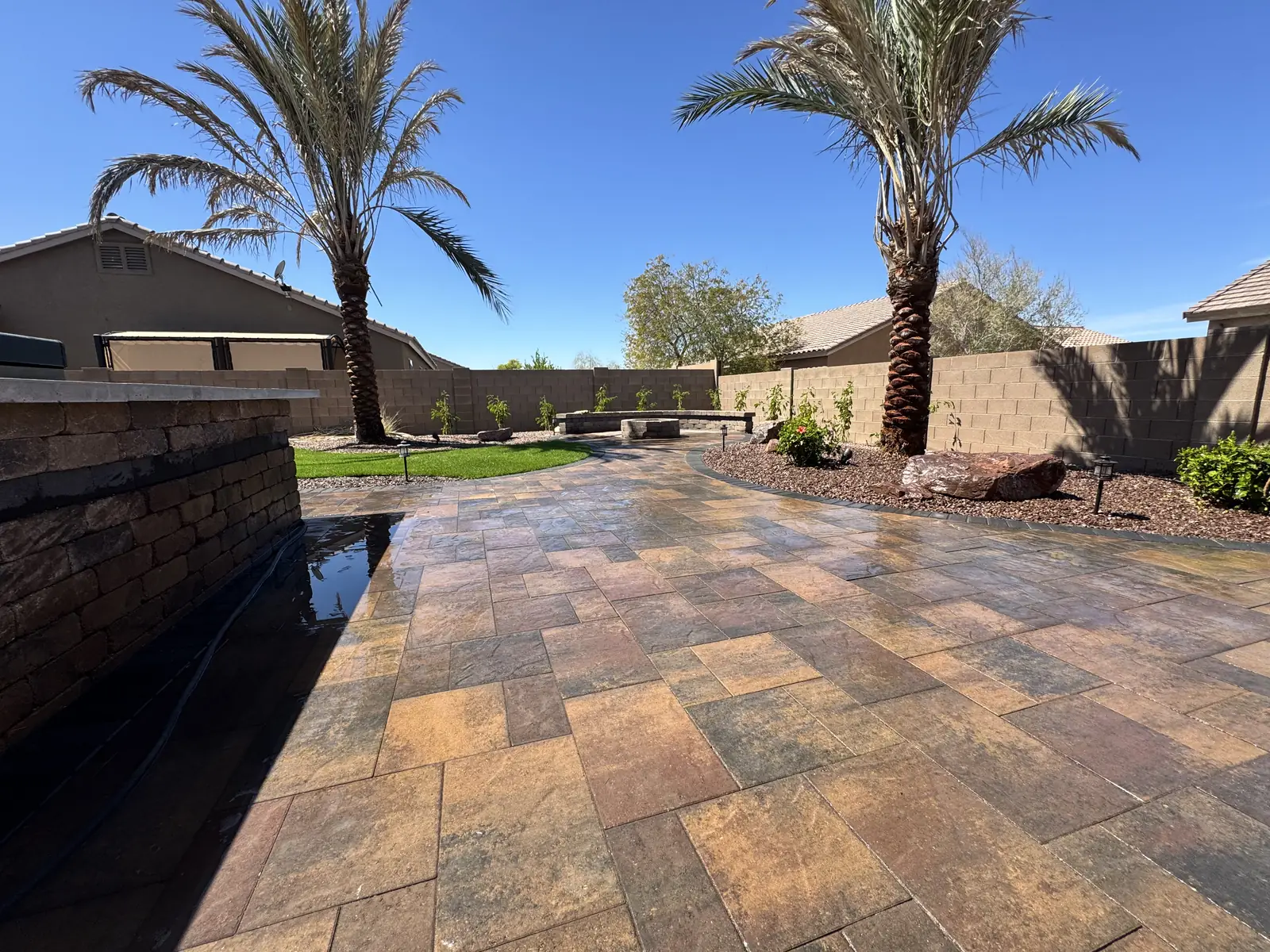
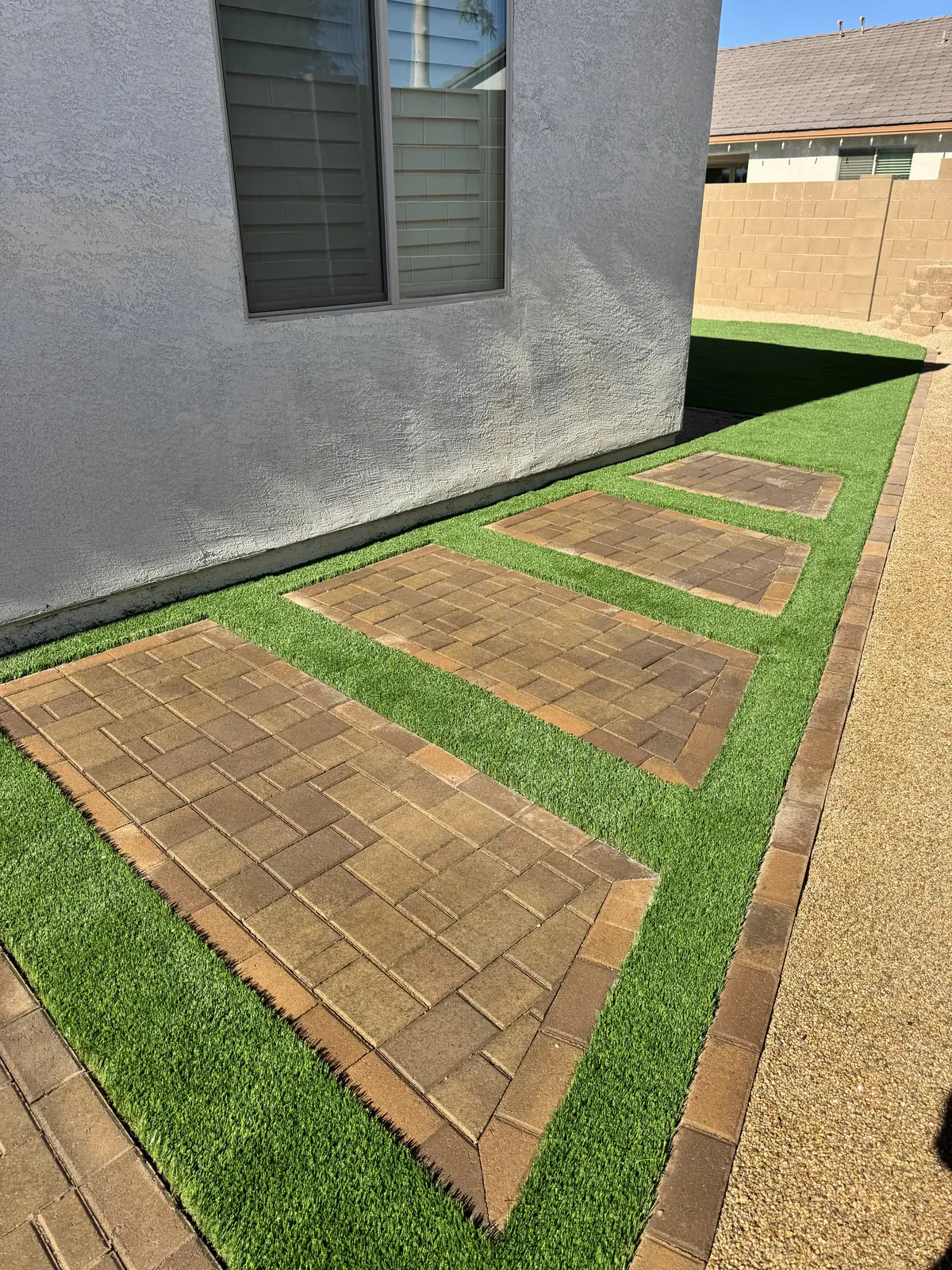
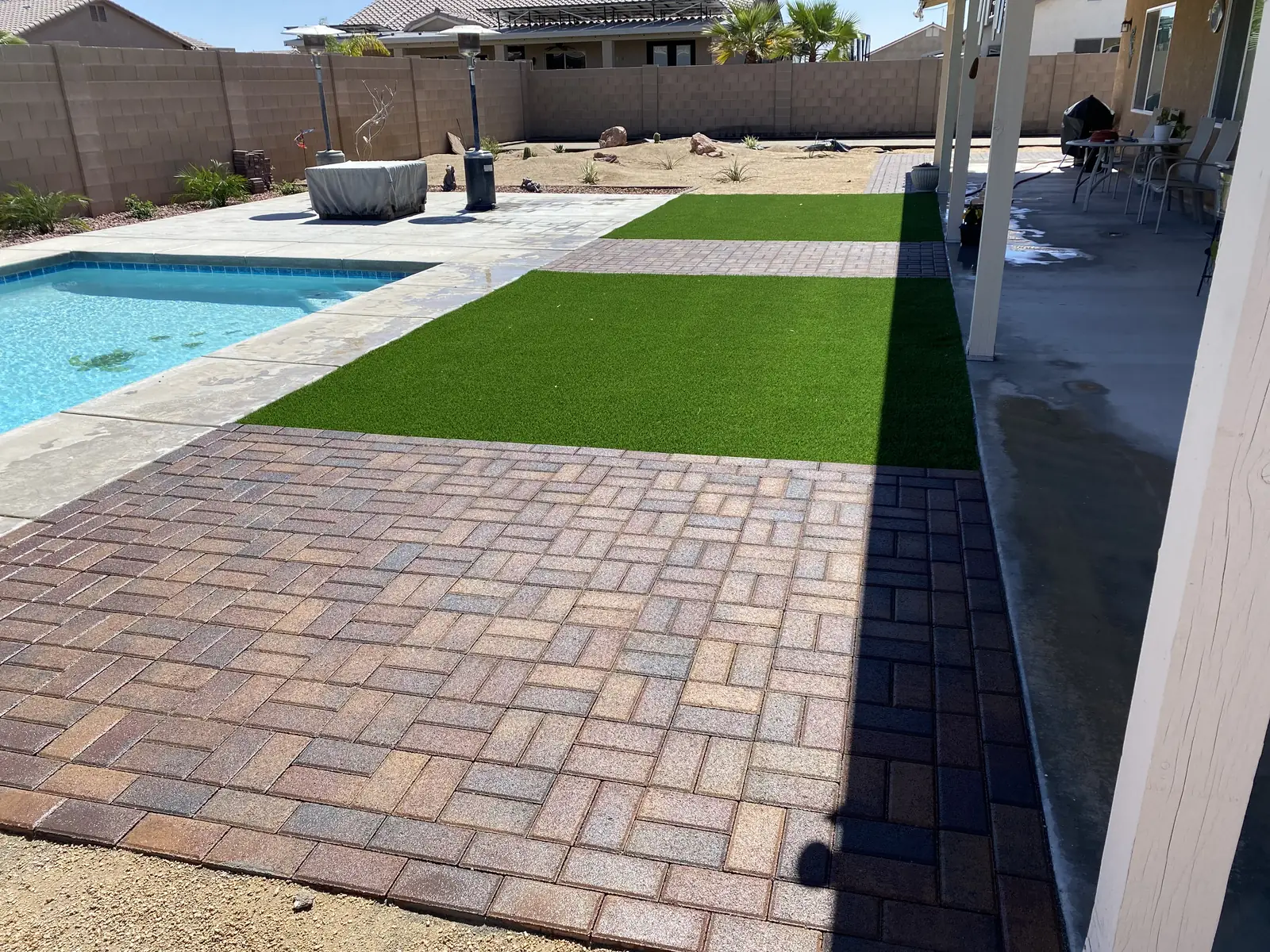
Paver border artificial turf — built by our own crews, right here in the East Valley.
Start with a free consultation
A patio is something you'll use almost every day for years. It's worth building once, and building it right.
We'll walk your site, talk through the base system it needs, and design your layout in 3D so you see the exact pattern and colors before anything gets dug up.
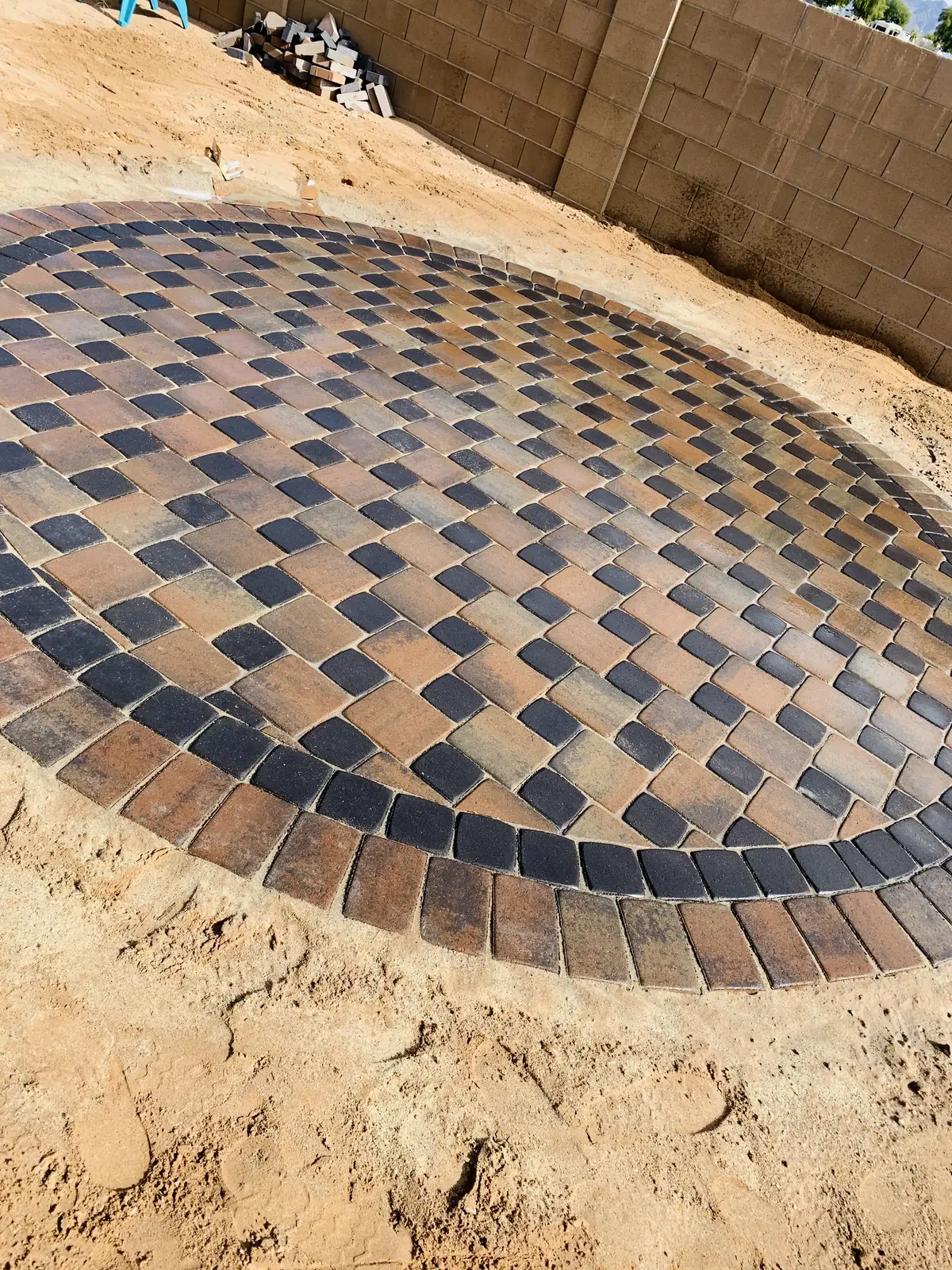
Recently built by our crews
Start with a free consultation
Free on-site consultation. Your 3D design ($279) comes after, credited toward your project.
Schedule a Consultation